
Non-Shedding Core in Cleanroom Panels: What It Is and Why It Matters
For pharmaceutical manufacturers, biotech procurement officers, and facility engineers specifying modular cleanroom wall panels, the core material inside each panel determines whether your controlled environment passes or fails its next particulate audit. This guide explains what a non-shedding core is, how core materials compare on key technical criteria, and which installation errors can silently compromise even a well-specified clean room sandwich panel system.
Key Takeaways
- A non-shedding core is a panel core engineered to release zero loose particles, fibers, or chemical off-gassing under operational stress-critical for ISO 14644-1 and EU GMP Annex 1 compliance.
- The three dominant core types-aluminum honeycomb, closed-cell EPS, and encapsulated Rockwool-each serve different regulatory, thermal, and fire-rated applications.
- 50mm wall thickness is the standard specification for pharmaceutical-grade cleanroom wall panels, balancing structural rigidity with walkable ceiling load requirements.
- Four installation failures-on-site cutting errors, sealant outgassing, micro-vibration shear, and base track misalignment-account for most particulate breaches in otherwise compliant systems.
- Moddulx, a direct manufacturer in Windsor, Ontario, fabricates panels to order with no distributor markup and short lead times for cleanroom projects across Canada and the US.
What Is a Non-Shedding Core in a Cleanroom Panel?
A non-shedding core is the structural interior layer of a clean room sandwich panel engineered not to release particulate matter-fibers, dust, foam beads, or chemical vapors-during cutting, installation, or long-term operation.
Standard construction panels use mineral fiber, open-cell foam, or loose insulation fills. These materials shed microscopic debris under vibration, temperature cycling, or mechanical stress. Inside a cleanroom, that debris translates directly into airborne particle counts.
Under ISO14644-1:2015, cleanroom classification runs from ISO Class 1 (fewest particles) to ISO Class 9 (near ambient air). At ISO Class 5-the threshold for pharmaceutical aseptic processing-the maximum allowable concentration of particles >5 um is 3,520 per cubic meter. A single deteriorating panel joint can breach that limit.
EU GMP Annex 1 further requires that surfaces in sterile manufacturing environments be smooth, impervious, and free of particulate-generating materials. A non-shedding core addresses this at the structural level-before surface coatings are applied.
Non-shedding performance is not a feature upgrade. For pharmaceutical, biotech, and environmental testing cleanrooms, it is a baseline compliance requirement.
How Do Different Core Materials Compare?
The right core depends on your ISO class target, fire rating requirements, thermal performance needs, and structural load specifications.
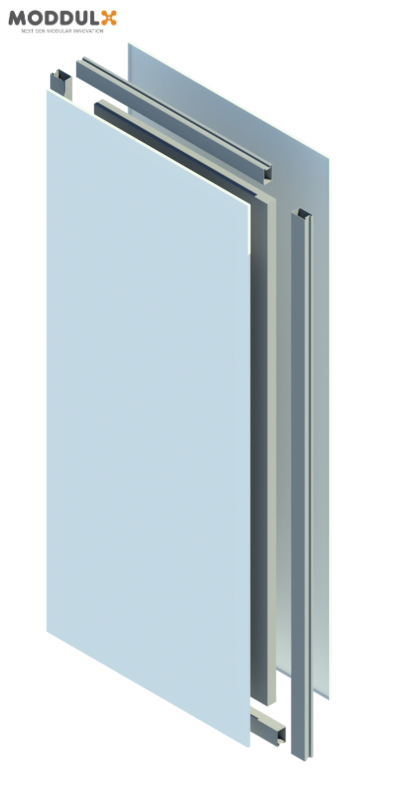
Aluminum Honeycomb Cleanroom Panels
- The aluminum honeycomb cleanroom panel is the preferred core for high-classification environments. Its hexagonal aluminum cell matrix contains no fibers, no organic binders, and no loose fill-producing zero particulate migration under vibration or thermal cycling.
- Its exceptional strength-to-weight ratio also makes it the standard choice for walkable ceiling systems.
- Moddulx aluminium honeycomb panels are fabricated at 50mm wall thickness as standard, with anti-corrosive coated steel or stainless-steel face skins available for chemical washdown environments.
Closed-Cell EPS Panels
- Closed-cell EPS cores deliver superior thermal insulation-critical for environmental testing cleanrooms and cold-chain pharmaceutical storage.
- Because each cell issealed, EPS poses no fiber migration risk. However, EPS panels require careful edge treatment on site; exposed cut edges must be sealed with cleanroom-grade sealant immediately after cutting to prevent micro-bead release.
Encapsulated Rockwool Panels
- For facilities requiring both fire resistance and particulate control, encapsulated Rockwool panels offer UL-listed certification fire ratings without exposing raw mineral fiber to the cleanroom interior.
- The core is fully enclosed within steel face skins and sealed edge profiles, preventing fiber migration during installation and operation.
- These panels are standard for pharmaceutical production areas where fire suppression regulations intersect with ISO cleanliness requirements.
Most Common Installation Failures With Cleanroom Panels
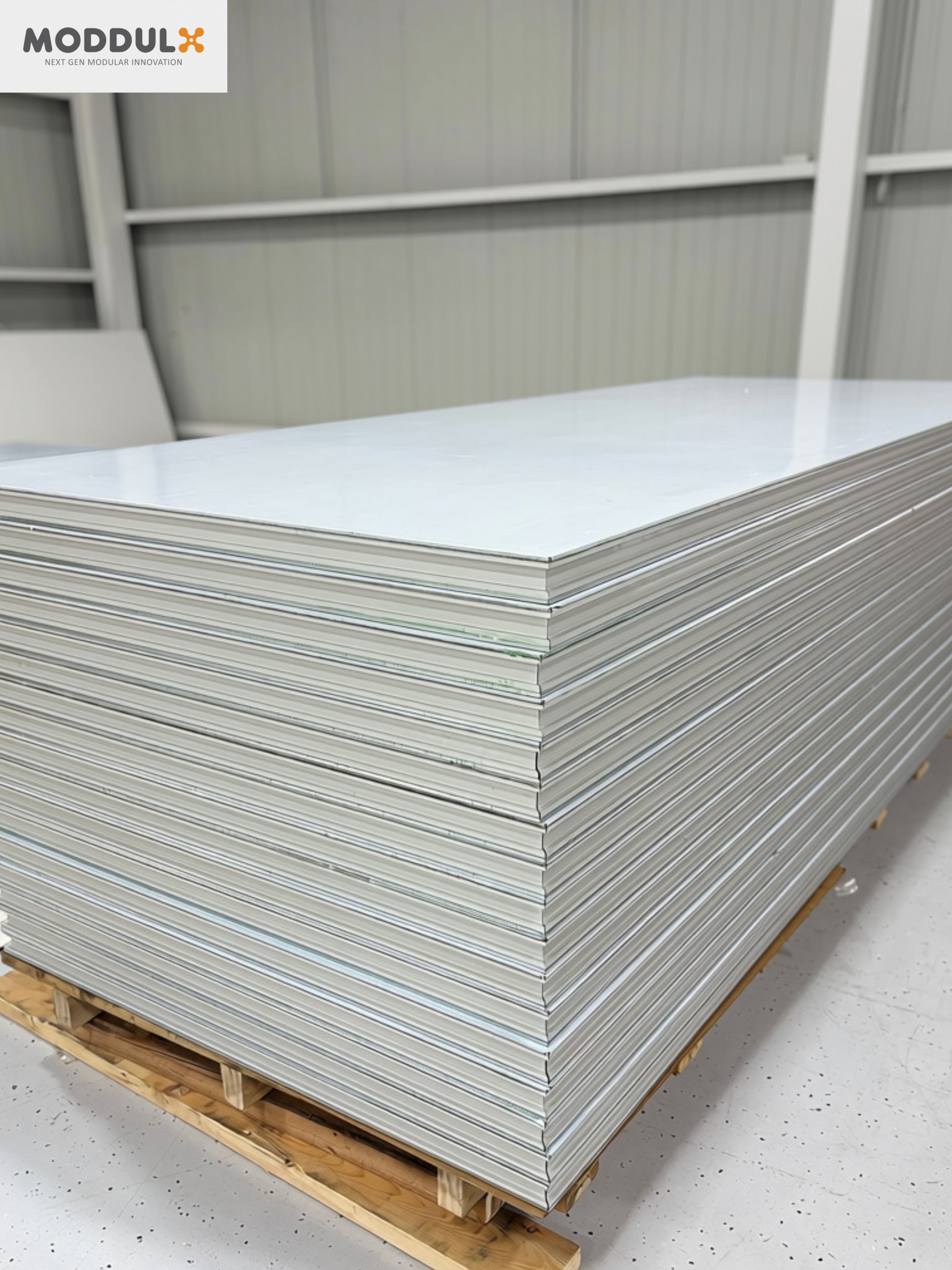
Specifying the correct clean room sandwich panel is only half the challenge. These are the four failure modes Moddulx engineers encounter most frequently on site.
1. On-Site Cutting Errors and Edge Delamination
Field-cutting without proper tooling exposes raw core at the cut edge. On aluminum honeycomb panels, improper cuts cause face skin delamination, leaving micro-gaps where particulate accumulates. Factory-cut panels to final dimensions wherever possible; seal any site cuts with a cleanroom-grade edge capping profile within the same work session.
2. Sealant Outgassing During VHP and IPA Washdowns
Vaporized hydrogen peroxide (VHP) and isopropyl alcohol (IPA) chemically attack silicone or polyurethane sealants not rated for repeated chemical exposure. As the sealant breaks down, VOCs are released into the cleanroom air and joint gaps widen, creating particulate pathways. Moddulx specifies chemically resistant sealants tested for VHP and IPA compatibility.
3. Structural Micro-Vibrations Causing Internal Shear
HVAC systems, conveyors, and foot traffic generate low-frequency vibrations that cause relative movement between core and face skins where adhesive bonding is inadequate-visible as surface waviness or a hollow sound when panels are tapped. Aluminum honeycomb cores resist shear delamination through cell-wall mechanical interlock, making them the preferred choice in high-vibration environments.
4. Base Track Floor Alignment Errors
Modular cleanroom wall panels rely on precisely aligned base tracks to maintain joint integrity at the floor line. Misalignment of even 1–2mm creates cumulative joint gaps at panel intersections-particulate ingress points and pressure differential breaches. Moddulx uses digital leveling tools and factory-provided base track templates on every installation.
Which Industries Require Non-Shedding Core Cleanroom Panels?
Pharmaceutical Facilities
Pharmaceutical facilities are the most demanding application. EU GMP Annex 1 sterile manufacturing areas and FDA-regulated aseptic fill lines require cleanroom wall panels maintaining ISO Class 5 or better under continuous production. Moddulx modular cleanroom wall panels are specified for both new-build and retrofit pharmaceutical projects.
Environmental Testing Cleanrooms
Environmental testing cleanrooms need stable thermal environments with zero particulate contamination that could compromise test samples. Closed-cell EPS panels within a self-supporting cleanroom frame deliver the required thermal stability and airtightness.
Server Rooms and Data Centers
Server room sandwich panel enclosures require cleanroom-grade particulate control to protect sensitive electronics. Moddulx server room systems combine non-shedding cores with anti-static surface treatments for data center and telecommunications applications.
Mobile Controlled Environment Room Door Panels
Mobile controlled environment room door panels must maintain non-shedding performance through repeated assembly, disassembly, and transport. Aluminum honeycomb is the standard specification for portable cleanroom door panels due to its dimensional stability under variable conditions.
Moddulx: Direct Manufacturer for Cleanroom Projects in Canada and the US
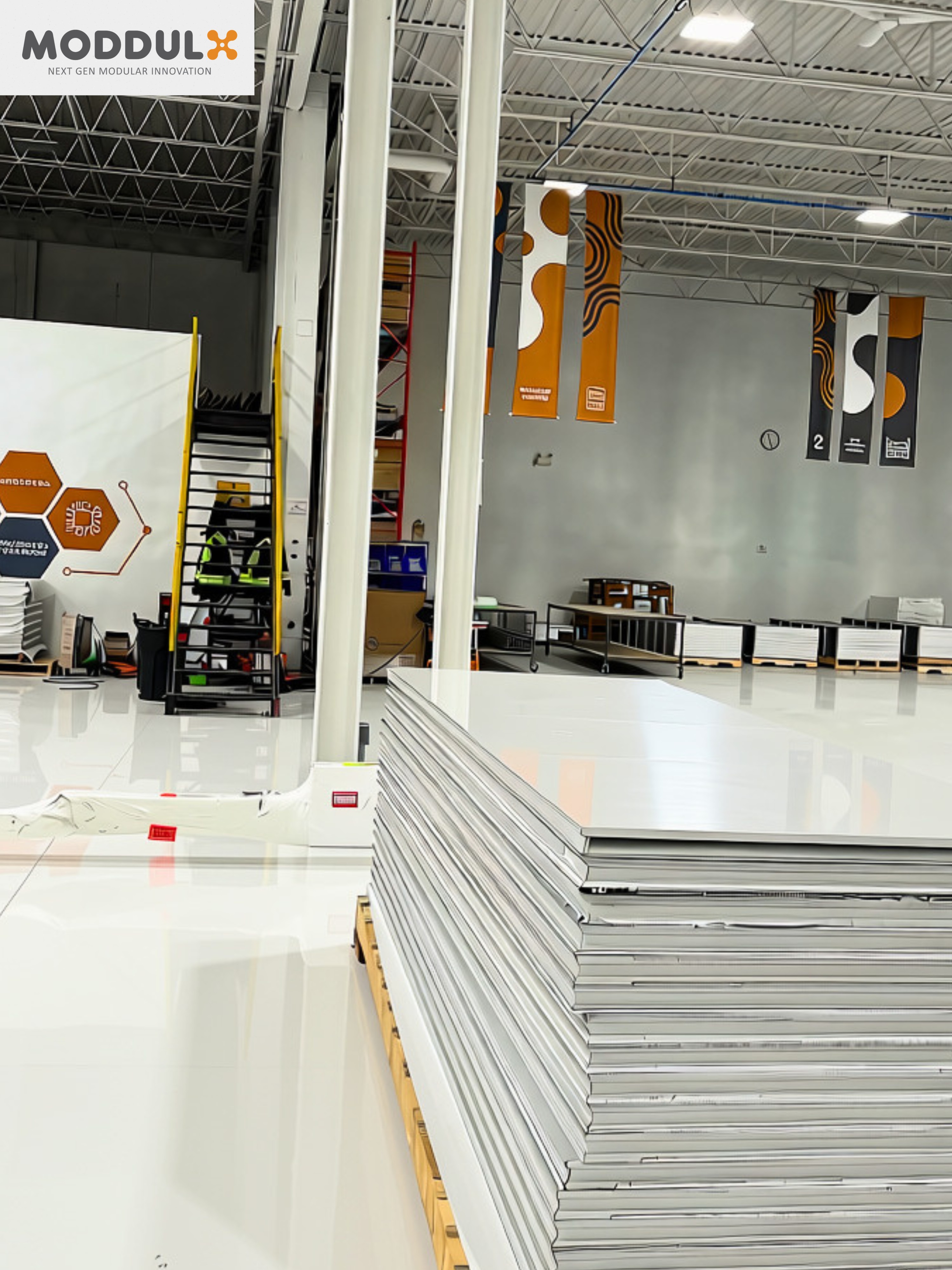
Moddulx supplies modular clean room panels directly to cleanroom contractors, pharmaceutical plant managers, and facility engineering teams across Windsor-Essex, the Greater Toronto Area, Michigan, and broader Canadian and US markets.
As a direct manufacturer, Moddulx controls specifications at the fabrication level-core material, face skin gauge, anti-corrosive coatings, and edge sealing details-eliminating the specification drift that occurs through distribution chains.
Cleanroom installation Windsor projects benefit from local engineering support and on-site installation supervision. Cleanroom design Windsor services cover facility layout planning, ISO classification mapping, HVAC integration, and structural load analysis.
What Factors Determine Cleanroom Wall Panels Cost?
Cleanroom wall panels cost varies based on decisions made early in the design phase:
- Core material: Aluminum honeycomb costs more than EPS upfront but reduces long-term maintenance costs in high-classification environments.
- Wall thickness: 50mm wall thickness is standard. Thicker panels (75mm or 100mm) are specified for enhanced thermal or acoustic performance.
- Anti-corrosive coatings: Required for chemical washdown or high-humidity environments; they add unit cost but extend service life significantly.
- System type: A self-supporting cleanroom system needs no external structural support, reducing building interface costs. Progressive systems attach to existing structure and typically cost less per square meter.
- Direct vs. distributor pricing: Buying direct from Moddulx eliminates distributor margin, typically reducing cost by 15–25% versus distribution-sourced equivalents.
Request a Custom Moddulx Panel Quote to receive specification-accurate pricing within one business day of submitting your drawings.